
You can tell a design partnership is working when a difficult question leaves the team clearer about what to do next. The architect can explain which part of the design matters to the client. The engineer can explain what the building needs and why. The owner can see the trade-off before being asked to decide.
A good partner asks about the intent
Take a room planned around an uninterrupted view. If someone suggests adding a column, “that won’t work” doesn’t give the team enough to act on. Is the column in the sightline? Does it interrupt circulation? Is there a better place to carry the load? Once the team knows which issue it’s solving, it can compare options against the same goal.
Sometimes the most useful response is to challenge the premise. A detail may depend on framing no one has seen, or a proposed change may affect the level below. Raising that early gives the team time to verify what’s there or choose a design that doesn’t depend on an uncertain assumption.
Good collaboration shows up in the handoff
After a design conversation, we want the team to know what was decided, what still needs to be checked, and who owns the next step. That might mean an architect revises a section, an owner arranges access to existing framing, or the engineer marks up an option for discussion. A clear handoff matters as much as a productive meeting.
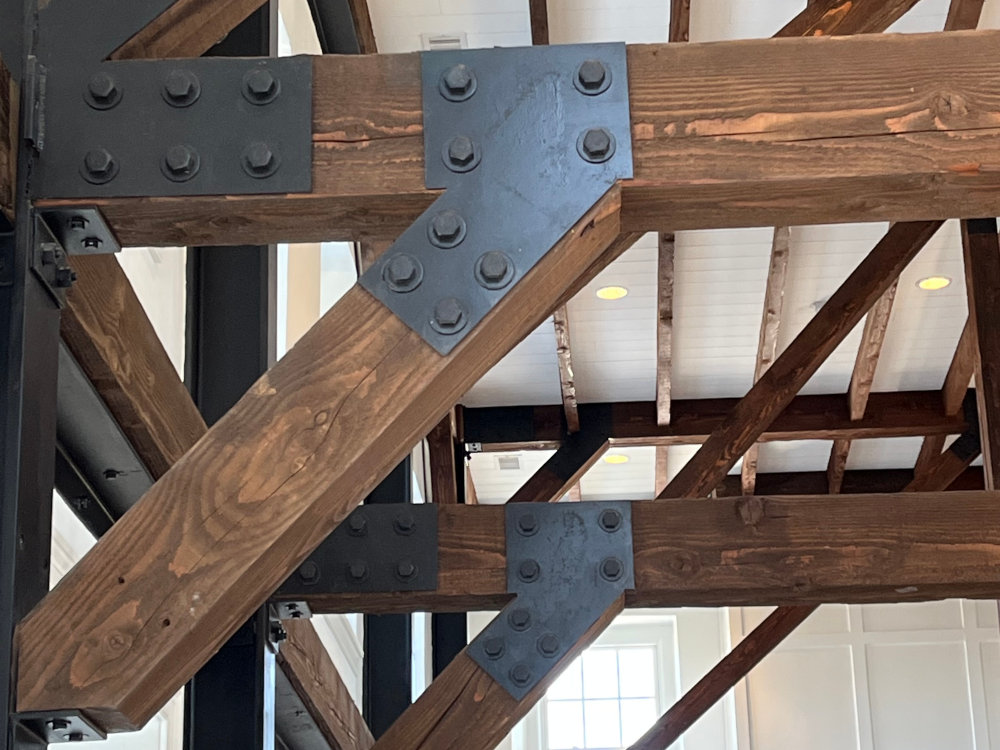
It matters again when drawings go to the builder. The relationship between a new beam and an old wall needs to be clear on the drawing, especially if the detail assumes a condition the builder must verify. Putting that information where the team can find it makes it easier to raise the right question before work moves on.
There’s no need to wait until every answer is known. If you’re looking for a structural partner, bring the idea you want to protect and the decision that’s holding it up.